 Skip to content

To unblock a sink, start with boiling water, then try a plunger, a baking soda and vinegar mix, or clearing the U-bend under the basin. Most kitchen and bathroom blockages come from grease, food scraps, hair, and soap build-up, and you can shift the majority with tools already in the house.
This guide walks you through how to unblock a sink safely, in the right order, and shows you when a slow drain is a warning sign of a deeper problem in your pipes.
Work through the gentle methods first before reaching for anything harsh. A little patience clears more blockages than brute force, and it keeps your pipes in one piece.
What You Need Before You Unblock a Sink
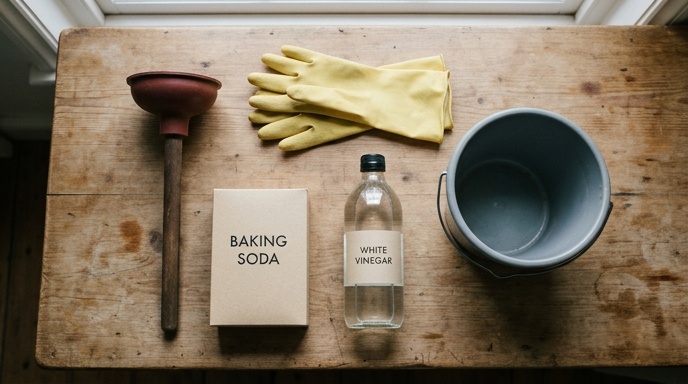
Before you start, gather a few basic items so you’re not running back and forth mid-job. Most of what you need to unblock a sink is already sitting in your kitchen or under the stairs. Having it ready makes the job faster and far less messy.
- A cup or sink plunger with a flat rubber head
- A kettle of boiling water
- Baking soda and white vinegar
- A bucket and old towels to catch spills
- Rubber gloves and a bin bag for gunk
- An adjustable wrench for the U-bend
Clear the area under the sink and put your bucket in place. If the basin is already full of standing water, bail some out first so you’ve room to work. That one step saves a soaked kitchen floor.
How to Unblock a Sink Step by Step
The safest way to unblock a sink is to work from gentlest to strongest, stopping as soon as the water drains freely. Boiling water and a plunger clear most everyday blockages, and only stubborn ones need the U-bend taken apart. Follow the steps below in order.
1. Start With Boiling Water
Pour a full kettle of boiling water slowly down the drain in two or three stages, pausing between each pour. This melts soft grease and soap that coats the pipe walls. It’s often enough on its own for a slow kitchen sink. Skip this step if you have PVC waste pipes and use very hot tap water instead.
2. Try a Plunger
Fill the basin with enough water to cover the plunger head, then block the overflow hole with a wet cloth. Place the plunger over the plughole and pump firmly up and down for around twenty seconds. The seal and suction shift the blockage back and forth until it breaks free. Repeat a few times before moving on.
3. Use Baking Soda and Vinegar
Tip roughly half a cup of baking soda down the drain, followed by the same amount of white vinegar. The mix fizzes and helps loosen grease and grime. Leave it for fifteen minutes, then flush with hot water. It’s a gentle, chemical-free option that’s kinder to your pipes than shop-bought drain cleaners.
4. Clean Out the U-Bend
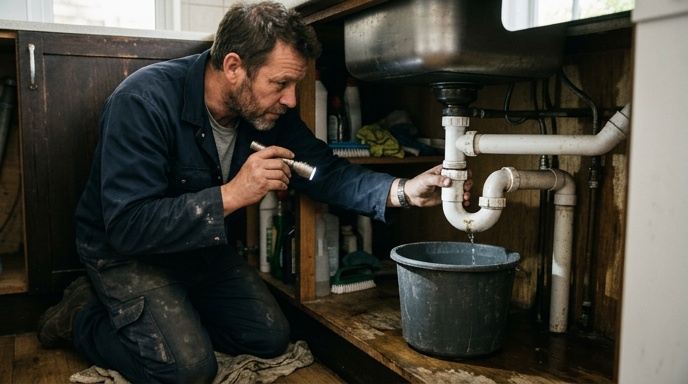
The U-bend is the curved trap under the sink where solid gunk collects. Place your bucket underneath, unscrew the two connectors by hand or with a wrench, and let the water drain out. Clear any debris inside, rinse the trap, and screw it back on. This clears the blockages the other steps can’t reach.
Why Do Sinks Keep Blocking?
Sinks block because of gradual build-up inside the waste pipe, most often grease, food waste, hair, soap scum, and coffee grounds. In kitchens the main culprit is fat that cools and hardens on the pipe walls. In bathrooms it’s usually hair binding with soap into a solid plug. Knowing the cause helps you stop it coming back.
A few habits make a real difference to how often you’re reaching for the plunger.
- Never pour cooking fat or oil down the sink, let it cool and bin it
- Scrape plates into the bin before rinsing
- Fit a mesh strainer over the plughole to catch food and hair
- Run hot water for a few seconds after washing greasy pots
- Flush the drain with boiling water once a week
If you follow a decent routine drain cleaning habit, you’ll head off most blockages long before they turn into a problem. Prevention costs nothing and saves you a soggy weekend.
Should You Use Chemical Drain Cleaners?
Chemical drain cleaners can clear a blockage, but they’re a last resort rather than a first choice. The strong acids and alkalis inside them can corrode older metal pipes, damage PVC over time, and give off fumes in an enclosed space. For a light blockage, boiling water and a plunger do the same job without the risk.
If you do reach for one, keep these points in mind:
- Open a window and wear gloves, the fumes are harsh
- Never mix two different products, the reaction can be dangerous
- Follow the dose on the bottle, more is not better
- Avoid them entirely on a fully blocked, standing-water sink
Pouring cleaner into a sink that won’t drain at all just leaves corrosive liquid sitting on the blockage. That’s the point to stop and call in help rather than tip in a second bottle.
When to Call a Professional for a Blocked Sink
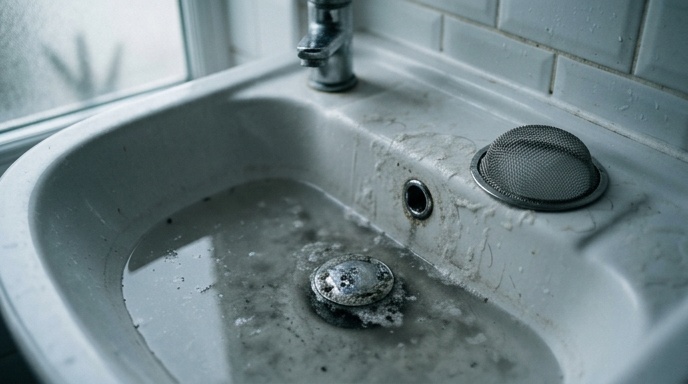
Call a professional when the blockage won’t clear after boiling water, plunging, and cleaning the U-bend, or when more than one drain in the house is slow. Recurring blockages, bad smells, gurgling sounds, and water backing up in a different fixture all point to a deeper issue in the main drain that home methods can’t fix.
Watch for these warning signs that the problem is past a DIY fix:
- Several sinks, baths, or toilets draining slowly at once
- A gurgling noise when water drains away
- A persistent drain smell that keeps coming back
- Water rising in one fixture when you use another
- The same sink blocking again within days of clearing it
At that stage a CCTV drain survey can pinpoint the exact cause, whether it’s a collapse, root ingress, or a hidden fat build-up, without any digging. With a 24/7 emergency line and callback within 15 minutes, our team can be out to North Dublin homes the same day. The Environmental Protection Agency also publishes useful guidance on protecting household drainage systems for anyone with a septic tank or private drain.
Trying the simple steps first is always worth it, and most blocked sinks give way to boiling water and a plunger. When they don’t, don’t force it and risk cracking a pipe. Request a free callout and we’ll clear it properly, no mess and no fuss.

