 Skip to content

To unclog a toilet, start with a good flange plunger, then move on to a toilet auger, hot water and washing-up liquid, a wet-dry vacuum, an enzyme cleaner, or a homemade baking soda mix if the plunger fails. Most household clogs clear with one of these six methods in under half an hour.
The trick is matching the method to the blockage. A wad of toilet paper responds to different tactics than a build-up further down the pipe. Below we walk through each method in the order you should try them, so you spend the least effort for the fastest result.
If none of them shift it, the problem usually sits deeper in the drain, and that is when a call to the drainage team makes sense rather than more elbow grease.
What You Need Before You Start Unclogging a Toilet
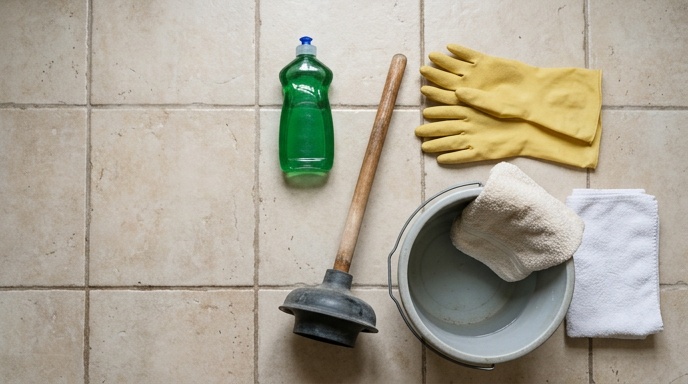
Before you touch the bowl, gather a few basics so you are not running for supplies mid-job. A blocked toilet is messy work, so protecting the floor and your hands comes first. Having the right kit ready is what turns a 10 minute job into a clean, quick fix.
- A flange plunger with a rubber cup shaped for a toilet, not a flat sink plunger.
- Rubber gloves and old towels or newspaper to cover the floor.
- A bucket, in case you need to bail water from the bowl.
- Washing-up liquid and a kettle for the hot water method.
- A toilet auger (also called a closet auger) for stubborn blockages.
One quick warning before anything else. If the water level is already near the rim, stop and bail some out with the bucket first. Plunging a full bowl just splashes dirty water everywhere.
Method 1: Use a Flange Plunger the Right Way
A flange plunger clears most toilet clogs when used properly, and it should always be your first attempt. The rubber flange folds out to seal the drain hole at the bottom of the bowl, creating the suction a flat plunger cannot. Done right, this shifts the majority of paper and waste blockages in a minute or two.
- Fit the flange into the drain hole so it forms a tight seal.
- Make sure the cup is covered by water, add some from the bucket if needed.
- Push down gently first to force out trapped air, then pump firmly 10 to 15 times.
- Break the seal on the last pull and watch whether the water drains.
Keep the plunger upright and steady rather than jabbing at an angle. If the water starts draining, flush once to confirm it is clear. Two or three rounds of steady plunging beats one frantic go.
Method 2: Try Hot Water and Washing-Up Liquid
Hot water and washing-up liquid loosens greasy or paper-heavy clogs by breaking them down and adding lubrication. This gentle method works well when a plunger alone has not quite done the job, and it needs nothing you do not already have in the house.
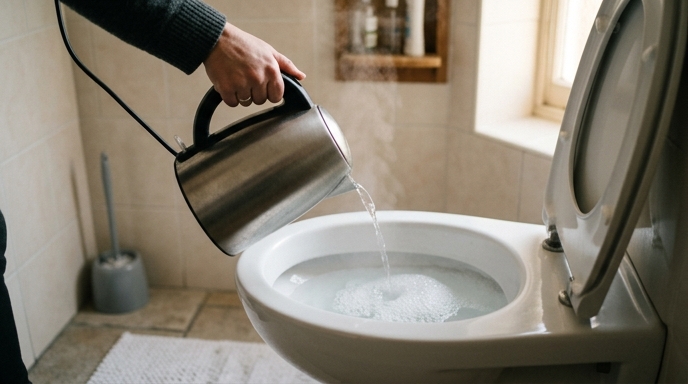
Squirt a generous amount of washing-up liquid into the bowl and leave it for five to ten minutes to slide down toward the blockage. Then pour in hot water from a height of about waist level to add force.
Use hot, not boiling, water. Boiling water can crack a ceramic bowl. Give it a few minutes to work, then try a flush. If the level drops slowly, repeat once before moving on.
Method 3: Reach Deeper With a Toilet Auger
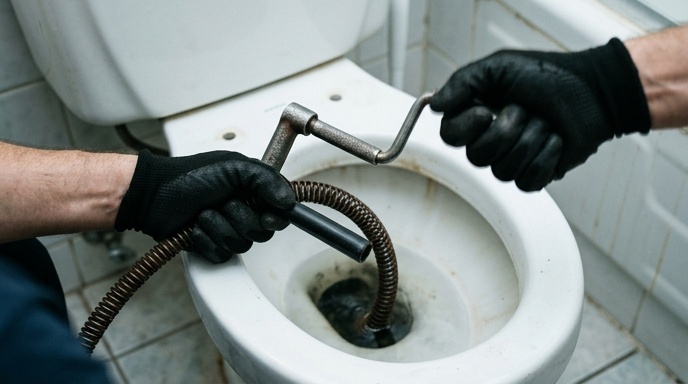
A toilet auger clears blockages sitting beyond the reach of a plunger by physically breaking through or hooking the obstruction. Also called a closet auger, it is a flexible cable with a crank handle and a protective sleeve that guards the porcelain from scratches. This is the tool for clogs a plunger keeps failing on.
- Feed the auger head into the drain hole until you feel resistance.
- Turn the crank clockwise to push the cable through the bend of the trap.
- When you hit the blockage, keep cranking to either break it up or catch it.
- Pull the cable back slowly, then plunge and flush to clear the debris.
An auger is the most reliable DIY option for a real blockage. If it will not pass a certain point or keeps snagging, that often points to something more solid lodged down the line, like wipes or a build-up on the pipe wall.
Method 4: Use a Wet-Dry Vacuum
A wet-dry vacuum can pull a blockage back out of the pipe when pushing it through has not worked. This method suits softer clogs near the top of the trap and works only with a proper wet-dry unit, never an ordinary household vacuum, which will be ruined by the water.
Empty the bowl of water first with your bucket. Wrap an old towel around the hose end to help form a seal in the drain hole, then switch the vacuum to its liquid setting.
Hold the hose firmly in place and let the suction draw the clog up and out. It is not a pretty job, but for the right blockage it works fast where plunging pushes the wrong way.
Method 5: Try an Enzyme Drain Cleaner
An enzyme cleaner breaks down organic waste over several hours and suits clogs made of paper, waste or food matter rather than solid objects. Unlike harsh chemical drain cleaners, enzyme products are gentle on pipes and septic systems, which makes them a safer choice for rural homes on a septic tank or bio-cycle unit.
- Pour the amount recommended on the bottle straight into the bowl.
- Leave it to work, usually several hours or overnight, so the enzymes reach the blockage.
- Flush the next morning and check the drain runs freely.
Steer clear of caustic soda and strong chemical unblockers on toilets. They can damage older pipework, generate dangerous fumes, and do real harm to a septic system. If you keep reaching for chemicals to keep a toilet flowing, the real fix usually lies further down the drain.
Method 6: Make a Baking Soda and Vinegar Mix
A baking soda and vinegar mix creates a fizzing reaction that can loosen light clogs and freshen the bowl at the same time. It is the cheapest method here and a fair last DIY roll of the dice before you accept the blockage needs professional gear.
Pour one cup of baking soda into the bowl, then slowly add two cups of white vinegar. Expect it to fizz up straight away. Leave the reaction to settle for about half an hour.
Follow with hot (not boiling) water and try a flush. This works best on minor, early-stage blockages. If the toilet is fully clogged, this alone rarely does it, so treat it as a booster alongside plunging.
When to Stop and Call a Drainage Professional
Call a drainage professional when several toilets or drains back up at once, when waste rises in a different fitting when you flush, or when a blockage keeps returning after every clear. These signs point to a problem in the main drain that no plunger or auger will reach.
A recurring or spreading blockage usually needs proper diagnosis rather than another home remedy. That is where a camera survey earns its keep by showing exactly what is going on underground.
- Sewage smell indoors or gurgling from other drains when you flush.
- Multiple fittings blocking together, a classic sign of a main drain issue.
- Water backing up into the shower or bath when the toilet is used.
- Slow drainage that returns within days of clearing it.
For blockages that keep coming back, a proper CCTV drain survey pinpoints root ingress, collapsed sections or build-up so the right repair happens once. Where the issue is a stubborn build-up along the pipe, high-pressure jetting scours the walls back to full width in a way DIY tools cannot. Our team runs a 24/7 emergency line with a callback inside 15 minutes, so an overflowing toilet at midnight gets sorted the same day.
Persistent blockages tend to be a symptom, not the whole story, and Ireland’s EPA guidance on wastewater and septic systems is a useful read for rural homes on a septic tank.
How to Stop Your Toilet Clogging Again
The best way to stop a toilet clogging again is to only flush the three P’s, pee, poo and paper. Most repeat blockages come from items that never break down, and cutting those out prevents the majority of household toilet problems before they start.
- Never flush wipes, even ones labelled flushable, as they do not break down.
- Keep cotton buds, sanitary products, nappies and kitchen roll out of the toilet.
- Go easy on toilet paper in one flush, split it into two if needed.
- For rural homes, get the septic tank serviced on schedule to avoid backflow.
Small habits save a lot of hassle. The Uisce Éireann advice on protecting your drains backs this up, and it is the same message every drainage crew repeats after clearing yet another blockage caused by wipes.
If your toilet keeps clogging no matter what you flush, the fault is likely in the pipework, not your habits. Request a free callout and we will diagnose the cause properly, then price any repair up front before a spanner touches the drain.

