 Skip to content

A shower drain smells because gunk, hair and soap scum build up in the pipe and start to rot, or because the water seal that blocks sewer gas has dried out or failed. In most homes it’s one of those two things, and both are fixable. The smell is your drain telling you something is stuck or something is letting gas up the pipe.
Below we walk through the real causes, what you can sort yourself in ten minutes, and when a bad smell means there’s a bigger problem underground. A musty whiff after a shower is usually harmless. A steady sewage stink that won’t shift is worth taking seriously.
Either way, you’ll know exactly what to check and what to do next by the end of this.
What Causes a Shower Drain to Smell?
A shower drain smells for one of four main reasons. Trapped hair and soap scum rotting inside the pipe, a dried-out or broken U-bend letting sewer gas up, biofilm coating the pipe walls, or a deeper blockage further down the drain run. Working out which one you have tells you how to fix it.
The most common culprits are:
- Hair and soap scum knotting together just below the plughole and trapping water that turns stagnant.
- A dry U-bend in a rarely used shower, so the water seal that normally blocks sewer gas has evaporated.
- Biofilm, a slimy bacterial layer that clings to pipe walls and gives off a musty, eggy smell.
- A partial blockage deeper in the line, holding water and waste where it shouldn’t sit.
Each has its own tell. A rotten-egg or sulphur smell usually points to sewer gas or biofilm. A damp, mouldy smell points to trapped hair and standing water near the plug.
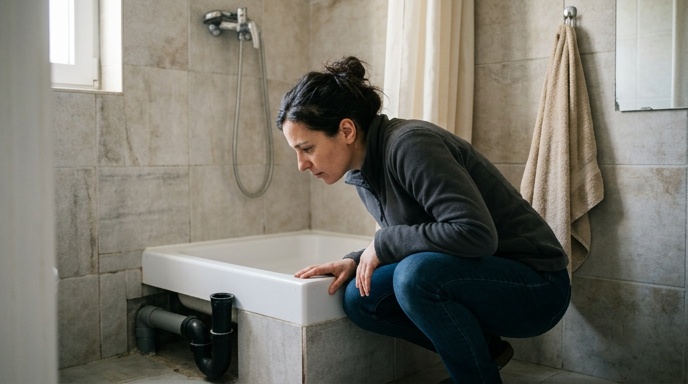
How Do You Tell What Kind of Smell You Have?
You tell the cause by the type of smell and when it happens. Sewer gas smells like rotten eggs and tends to be strongest when the shower has sat unused. A musty or mouldy smell means trapped hair and stagnant water. A sour, greasy smell points to biofilm and soap build-up on the pipe walls.
Use this quick guide to match the smell to the likely cause.
| Smell Type | Likely Cause | First Thing to Check |
|---|---|---|
| Rotten egg or sulphur | Dry U-bend or sewer gas | Run the shower for two minutes to refill the trap |
| Musty or mouldy | Trapped hair and stagnant water | Lift and clean the drain cover |
| Sour or greasy | Biofilm and soap scum | Flush with hot water and a cleaner |
| Strong sewage, persistent | Blockage further down the line | Book a drain inspection |
If the smell only appears when other taps or the toilet run, that points to a venting or drainage issue beyond the shower itself. That’s worth a professional look.
How to Fix a Smelly Shower Drain Yourself
Most smelly shower drains are fixed in under fifteen minutes with a good clean and a flush. Start by removing the hair and gunk near the plughole, then clear the pipe walls, then refill the U-bend if it has dried out. Follow the steps in order and you’ll clear the majority of everyday smells.
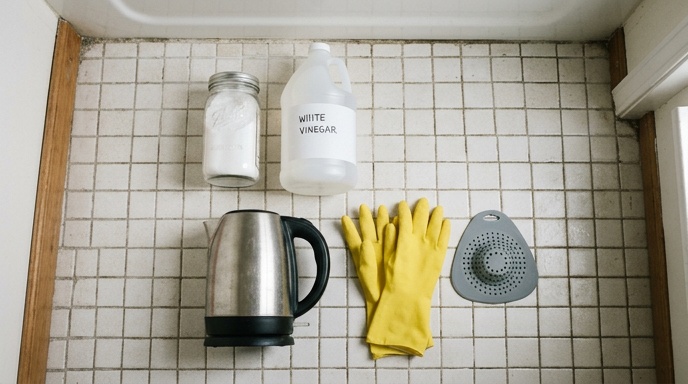
The steps are:
- Lift out the drain cover or grate and pull away visible hair and scum with a gloved hand or a drain claw.
- Pour a kettle of very hot (not boiling) water down to loosen soap and grease.
- Tip in a cup of baking soda, follow with a cup of white vinegar, and leave it to fizz for fifteen minutes.
- Flush with more hot water to rinse everything through.
- Run the shower for two full minutes to refill the U-bend if the bathroom is rarely used.
Skip caustic shop-bought drain acids where you can. They damage older pipes and often just push the problem further down. For a full clean routine, our guide to keeping drains clean and clear covers the same approach for kitchen and outside drains too.
What About the U-Bend Seal?
The U-bend holds a small pool of water that blocks sewer gas from rising up the pipe. In a guest shower or holiday home that seal evaporates over weeks and lets the smell straight in. Running the shower for a couple of minutes refills it and the smell usually goes within the hour.
How Do You Stop the Smell Coming Back?
You stop it coming back by clearing hair before it builds and flushing the drain regularly. A cheap silicone hair catcher over the plughole does most of the work.
- Fit a hair strainer and empty it weekly.
- Flush with hot water and baking soda once a fortnight.
- Run little-used showers for two minutes every week or two to keep the trap wet.
When Is a Smelly Shower Drain a Bigger Problem?
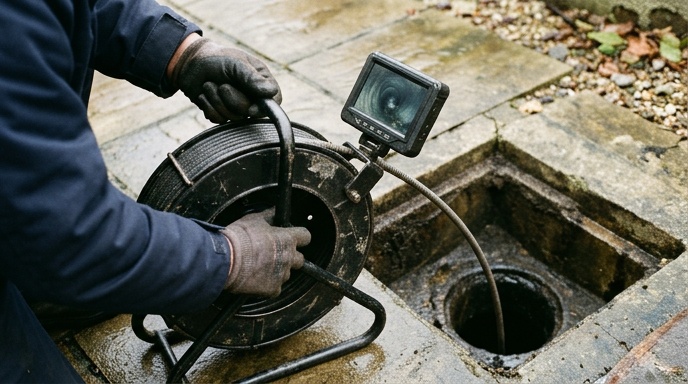
A smelly shower drain is a bigger problem when the odour won’t shift after a thorough clean, when it comes with slow draining, or when it spreads to other fixtures. That usually means a blockage or fault further down the line, a cracked pipe, or a broken seal you can’t reach. At that point a camera survey finds the cause fast.
Watch for these warning signs:
- The smell returns within days no matter how well you clean.
- Water drains slowly or gurgles when it empties.
- The same smell appears at the sink, toilet or outside gully.
- Damp patches or staining appear on nearby walls or floors.
These point to a deeper cause like root ingress, a collapsed section, or a displaced joint. A CCTV drain survey sends a camera down the pipe so the exact fault is seen on screen, not guessed at. It saves digging up a floor to find the problem. Persistent smells with dampness should never be left, as sewer gas and standing waste can affect air quality in the home. The official HSE health information is a sensible reference on indoor damp and its effects.
How Much Does It Cost to Fix a Smelly Drain?
Fixing a smelly shower drain costs nothing if a home clean sorts it, which it does in most cases. If the smell points to a blockage or fault underground, the cost depends on what the inspection finds, so a fixed quote up front is the honest answer rather than a number pulled from the air.
What moves the price:
- Whether it’s a simple clear or a deeper blockage needing jetting.
- How far down the fault sits and whether a camera survey is needed to locate it.
- Whether a repair like re-lining or a joint fix is required after diagnosis.
Prices for drainage work in Ireland vary widely by job and access, so treat any online figure as a rough guide only. The team here quotes a fixed price up front before any work starts, with repairs priced separately and only done with your say-so. If you’d rather have it looked at than keep guessing, request a free callout and get a straight answer.
Consumer guidance on getting and comparing tradesperson quotes is set out well by Citizens Information on consumer rights, which is worth a read before you book any home repair.
Fixing the Smell for Good
Most smelly shower drains come down to trapped hair, a dried trap, or soap build-up, and a fifteen-minute clean sorts them. When the smell keeps coming back or spreads to other fixtures, there’s something deeper going on that a good clean won’t reach.
If you’ve cleaned the drain and the smell is still there, or you’d rather have it diagnosed properly the first time, call the 24/7 line on (01) 849 1706 or request a free callout and we’ll find the cause and fix it.

