 Skip to content

To unclog a drain, start by removing any visible debris, then flush with boiling water, try a plunger, and use a drain snake or a baking soda and vinegar mix for stubborn blockages. Most household clogs clear with these steps in under half an hour.
Knowing how to unclog a drain saves you from standing water, a bad smell, and a bigger bill later on. This guide walks through each method in order, from the gentlest fix to the ones that need a bit of muscle.
We’ll also flag the warning signs that mean the blockage is deeper than your plunger can reach, so you know when a home fix stops and a proper call-out begins.
What You Need Before You Start Unclogging a Drain
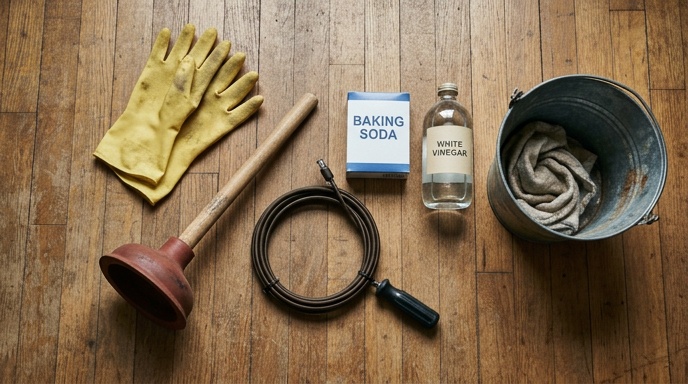
Gather a few basic tools before you touch the drain, because stopping halfway to hunt for a plunger only makes the mess worse. Most of what you need is already in the house or costs very little from any hardware shop.
- A cup or sink plunger with a good rubber seal
- A pair of rubber gloves and an old towel or two
- A drain snake or a straightened wire coat hanger
- Baking soda, white vinegar, and a kettle of boiling water
- A bucket to catch water and debris
Clear the area around the drain and lift out any standing water you can with a jug. A dry-ish start gives the plunger and other methods far more grip.
How Do You Unclog a Blocked Sink or Shower Drain?
Unclog a sink or shower by clearing the plughole, flushing with boiling water, then plunging, and finally snaking the pipe if the water still won’t drain. Work through these in order, since the simplest step often does the job on its own.
Step 1: Remove Visible Debris From the Plughole
Pull out hair, soap scum, and food scraps sitting in or just below the plughole. In a shower, a build-up of hair around the trap is the usual culprit. Fish it out with gloved fingers or a bent wire before trying anything stronger.
Step 2: Flush With Boiling Water
Pour a full kettle of boiling water down the drain in two or three goes, pausing between each. This melts grease and loosens soap build-up in kitchen sinks especially. Skip this step if your pipes are old PVC that could soften, and use hot tap water instead.
Step 3: Try Baking Soda and Vinegar
Tip a half cup of baking soda down the drain, follow it with a half cup of white vinegar, then cover the plughole for ten minutes. The fizzing reaction helps break down grime. Flush it through with hot water afterwards.
Step 4: Plunge and Snake
Fill the sink with a couple of inches of water, seal the plunger over the plughole, and pump firmly ten to fifteen times. If that fails, feed a drain snake in, turn it to catch the blockage, and pull it back out.
How to Unclog a Blocked Toilet
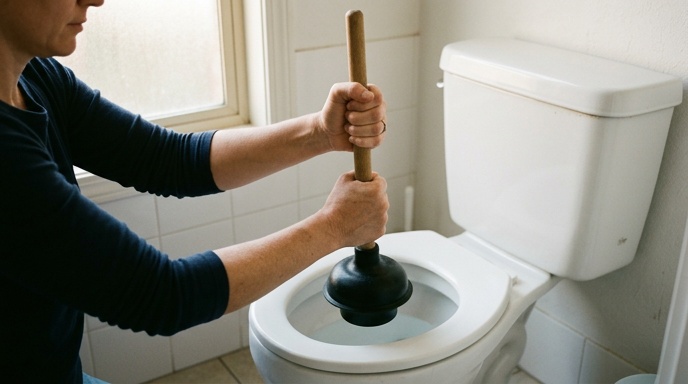
Unclog a toilet with a flange plunger and steady pumping, not force, and never keep flushing a bowl that won’t drain. A flange plunger has an extra rubber lip that seals the toilet outlet properly, which a flat sink plunger can’t do.
Add warm water to the bowl if it’s low, so the plunger head stays submerged. Push down gently first to release trapped air, then pump with firm even strokes for about twenty seconds. Repeat until the water drains freely.
- Use a flange plunger, not a cup plunger, for the correct seal
- Never flush repeatedly, as it risks an overflow across the floor
- Avoid chemical drain cleaners in a toilet, as they rarely reach the blockage and can damage the pan
If plunging does nothing after several attempts, the blockage likely sits further down the soil pipe. That’s a job for proper drainage gear rather than more effort with the plunger.
How Do You Clear a Blocked Outside Drain?
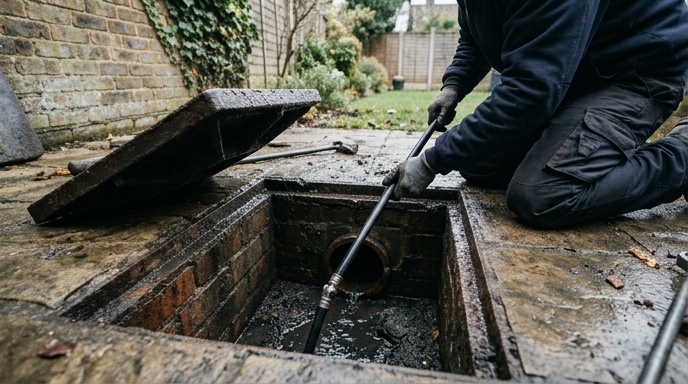
Clear a blocked outside drain by lifting the grid, removing the surface debris by hand, then using drain rods to push through the blockage in the pipe. Outside drains collect leaves, silt, and grease, so the fix is often just getting the muck out of the way.
Wear gloves and old clothes, because this one gets messy. If you can see standing water in the chamber, the blockage is downstream of it. Feed the drain rods in and turn them clockwise as you push, so the sections don’t unscrew and get lost in the pipe.
- Lift the drain cover and scoop out leaves, silt, and debris
- Rod the pipe in the direction of the blockage, turning clockwise
- Rinse the chamber with a hose or a bucket once it drains
Recurring outside blockages often point to something deeper, like root ingress or a partial collapse. A high-pressure jetting service scours the pipe to its full width and shifts build-up that rodding can’t. When blockages keep coming back, a camera survey shows exactly what’s going on underground.
What Should You Avoid When Unclogging a Drain?
Avoid harsh chemical drain cleaners, boiling water in old plastic pipes, and forcing rods or snakes against a hard blockage. These common mistakes turn a minor clog into a damaged pipe and a much larger repair bill.
Chemical cleaners are the big one. They eat away at pipe joints over time, sit harmlessly on top of a solid blockage, and give off fumes in an enclosed space. In practice they rarely fix a real blockage and often make the next one worse.
- Don’t pour fats, oils, or grease down any drain, hot or cold
- Don’t flush wipes, nappies, or sanitary items, even ones labelled flushable
- Don’t force a snake or rods when you hit solid resistance
- Don’t ignore a slow drain, as it usually gets worse, not better
If a home method isn’t working after a fair go, stop. Pushing harder risks cracking a pipe or driving the blockage into a spot that needs excavation to reach.
When Should You Call a Professional Instead?
Call a drainage professional when the blockage won’t shift, keeps coming back, affects more than one fixture, or brings sewage back up into the house. These signs mean the problem sits deep in the main line, beyond the reach of any home tool.
Multiple slow drains, gurgling from a toilet when a sink empties, or a foul smell from outside all point to a blockage in the shared pipe run. A professional drain unblocking service uses jetting and CCTV to find and clear the true cause rather than the symptom.
- Sewage or waste water backing up into sinks, baths, or the garden
- Several drains blocking or draining slowly at the same time
- A blockage that returns within days of clearing it
- A bad smell you can’t trace or shift
A blocked drain overflowing counts as an emergency, especially with sewage involved. For urgent situations, a 24/7 team with a 15-minute callback can attend the same day across North County Dublin. When you’re unsure, you can always request a callout or free quote rather than risk making it worse.
Getting Your Drain Sorted Fast
Most blocked drains clear with a plunger, boiling water, or a bit of rodding, and the prevention habits above keep them running for good. Work through the steps in order and stop the moment you hit something a home fix clearly won’t shift.
When a drain keeps blocking, backs up, or smells no matter what you try, get a proper diagnosis before it turns into a dig-up. Call the 24/7 line on (01) 849 1706 or request a free callout online and have it sorted properly.

