 Skip to content

To unblock a bathroom sink without chemicals, start by removing the pop-up plug and pulling out any hair and gunk by hand, then flush the pipe with boiling water. If that fails, try a cup of baking soda followed by white vinegar, or work a plunger over the plughole. Most slow bathroom sinks clear with these methods inside twenty minutes.
Chemical drain cleaners are harsh on older pipes, dangerous around children, and often only shift part of the blockage. The good news is a slow or blocked bathroom sink is usually caused by hair and soap scum caught in the U-bend, which you can clear with a few household bits and a bit of patience.
Below we walk through what you need, the exact steps in order, and the point where a chemical-free fix stops being enough and you need a drainage team out.
What You Need to Unblock a Bathroom Sink at Home
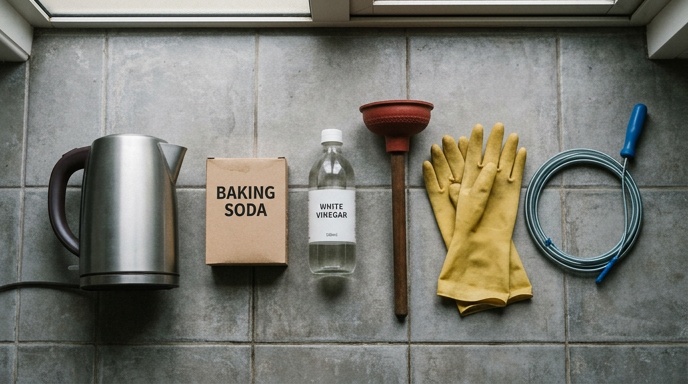
You need a handful of everyday items to clear a bathroom sink without chemicals. Nothing here costs much, and most homes have most of it already under the sink or in the kitchen press.
- A kettle of boiling water to loosen soap and grease.
- Baking soda (bicarbonate of soda) and white vinegar.
- A cup plunger that covers the plughole fully.
- Rubber gloves and an old cloth or towel.
- A bucket or basin to catch water from the U-bend.
- A drain snake, or a straightened wire coat hanger with a small hook bent into the end.
Lay the towel down and keep the bucket handy before you start. Bathroom sink water carries hair and soap, so it’s mucky work, and you’ll want to catch what comes out rather than let it spill across the floor.
How Do You Unblock a Bathroom Sink Step by Step?
Work through these steps in order, stopping as soon as the water drains freely. Each one is more hands-on than the last, so you rarely need all of them. Most slow sinks clear at step two or three.
- Remove and clean the plug. Lift out the pop-up stopper (most twist or pull straight up) and pull away the tangle of hair wrapped around it. This alone fixes a lot of slow sinks.
- Flush with boiling water. Pour a full kettle slowly down the plughole in two or three goes to melt soap and grease build-up.
- Add baking soda and vinegar. Tip a good handful of baking soda down, follow with a cup of white vinegar, and let it fizz for ten minutes before flushing with more hot water.
- Plunge it. Cover the overflow hole with a wet cloth, seal the plunger over the plughole, and pump firmly ten to fifteen times.
- Hook out the blockage. Feed a drain snake or bent coat hanger down and twist to snag hair, then pull it back out.
If none of that works, the clog is likely sitting in the U-bend, the curved pipe under the sink, and that’s the next place to look.
How to Clean the U-Bend Under the Sink
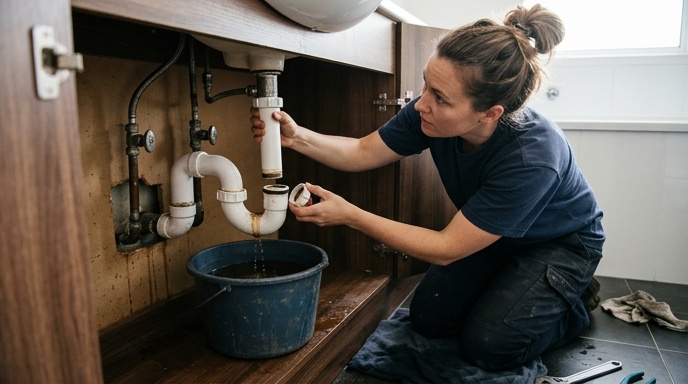
The U-bend traps the worst of the hair and soap, and clearing it by hand fixes stubborn blockages that plunging misses. Place your bucket directly under the trap first, because it holds standing water that will spill the moment you loosen it.
- Unscrew the two plastic collars at each end of the U-bend by hand, or with slip-joint pliers if they’re tight.
- Let the water and debris drain into the bucket.
- Pull out any hair and gunk, then rinse the trap under another tap.
- Reseat the washers, screw the collars back on hand-tight, and run the tap to check for drips.
Why Boiling Water and Baking Soda Work
Boiling water melts the soap and grease binding hair together, while baking soda and vinegar create a fizzing reaction that lifts loosened debris off the pipe walls. It’s mild, safe on most pipes, and won’t damage the plastic waste fittings common in Irish bathrooms.
One caution. Don’t pour boiling water down a sink fitted with older PVC or a cracked trap without care, and never mix these methods with a shop-bought chemical cleaner already sitting in the pipe.
Why Do Bathroom Sinks Keep Blocking?
Bathroom sinks block because hair, soap scum, toothpaste and skin oils bind together in the U-bend and slowly narrow the pipe. It’s the single most common domestic drain problem we clear, and it builds up gradually until the water suddenly stops draining.
A few habits make it worse over time:
- Washing hair over the sink without a plug strainer.
- Traditional bar soap, which leaves more scum than liquid wash.
- Rinsing hair clippings or beard trimmings down the plughole.
- Hard-water scale in some areas narrowing the pipe further.
A simple plughole hair strainer catches most of this before it ever reaches the trap. If your sink keeps blocking even after you clear it, the cause may sit further down the waste pipe, and a proper look with a camera tells you exactly what’s going on. You can read more about the range of options in our guide to professional drain cleaning when home methods stop holding.
When Should You Call a Professional Instead?
Call a professional when the blockage returns quickly, affects more than one fixture, or the water backs up rather than drains slowly. These signs point to a problem deeper in the drain run than a bathroom sink trap, and no amount of baking soda will shift it.
Get a drainage team out if you notice any of the following:
- Several drains slow or gurgle at the same time, which suggests a shared blockage downstream.
- A bad smell that returns after every clean.
- Water rising back up the plughole or overflow.
- Repeat blockages weeks apart despite clearing the trap.
- Signs of root ingress or a suspected collapsed pipe on an older property.
When it gets to that stage, a quick drain unblocking callout with high-pressure jetting clears the full pipe width in a way household methods can’t. For persistent or recurring blocks, a CCTV drain survey shows the exact cause on screen, so you fix the root of it rather than clearing the same clog every few weeks.
For guidance on keeping household drains healthy, the national water utility advice on caring for your pipes is a solid reference.
How to Stop Your Bathroom Sink Blocking Again
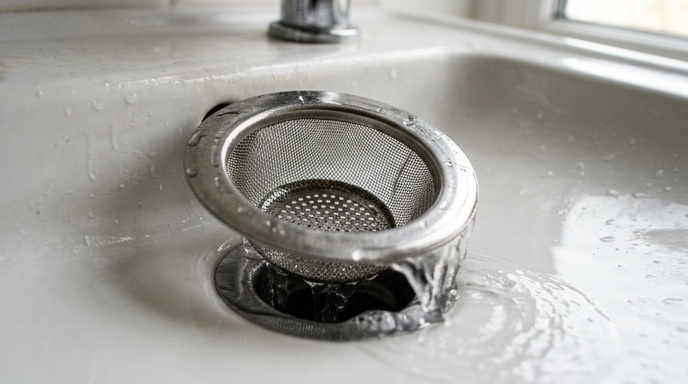
Prevent bathroom sink blockages by catching hair before it enters the drain and flushing the pipe with hot water once a week. A few small habits keep the U-bend clear and save you the messy job of stripping it down again.
- Fit a fine plughole strainer and empty it regularly.
- Pour a kettle of hot water down once a week to shift soap build-up.
- Wipe hair from razors into the bin, never the sink.
- Do a monthly baking soda and vinegar flush as routine maintenance.
- Deal with a slow drain early, before it becomes a full blockage.
For a busy family bathroom or a rented property with several sinks, staying on top of this saves both hassle and callout costs. Landlords and property managers with multiple units often find a scheduled maintenance arrangement works out cheaper than repeat emergencies across a portfolio.
What Does It Cost to Get a Bathroom Sink Unblocked?
A straightforward domestic drain unblocking callout in the Dublin area typically falls in a researched range of around €80 to €150, depending on access, how deep the blockage sits, and whether jetting or a camera is needed. Treat that as an estimate rather than a fixed quote, since every job differs.
Factors that move the price include:
| Factor | Effect on Cost |
|---|---|
| Simple sink trap clear | Lower end of the range |
| Blockage deep in the waste pipe | Mid to higher, may need jetting |
| Out-of-hours or emergency callout | Higher than a booked daytime slot |
| CCTV survey to find the cause | Added on top for recurring problems |
We give a fixed price up front, on the phone or on arrival, so you know the cost before any work starts and there are no surprises after. Any repair beyond clearing the blockage is priced separately and only goes ahead once you agree it.
Chemical-Free Fixes That Sort Most Slow Sinks
Most slow or blocked bathroom sinks clear at home with hot water, baking soda, a plunger and a quick clean of the U-bend, all without a drop of chemical cleaner. Work through the steps in order and stop as soon as the water runs freely.
If the sink keeps blocking, backs up, or affects other drains, that’s your cue it’s deeper than a trap. With a team on call 24/7 across North Dublin, Fingal, Meath and Louth, and a callback within 15 minutes, you don’t have to live with a recurring problem. Request a free callout and we’ll get it sorted properly.

