 Skip to content

You can unblock a toilet without a plunger by pouring hot (not boiling) water mixed with washing-up liquid into the bowl, letting it sit for 20 minutes, then testing the flush. The soap lubricates the blockage while the heat helps break it down, which shifts most soft, everyday clogs on its own.
That said, not every blockage clears with a kitchen fix. If the water is rising to the rim, backing up into the shower, or the same toilet keeps clogging, the problem sits deeper in the pipe and needs proper equipment.
Below are the methods that actually work, in the order to try them, plus the warning signs that tell you it’s time to stop pouring things down the bowl and call for help.
What Is the Fastest Way to Unblock a Toilet Without a Plunger?
The fastest reliable method is hot water and washing-up liquid. Squeeze a generous amount of washing-up liquid into the bowl, then pour in around four to five litres of hot water from waist height. The soap coats the blockage and the heat softens it, so most soft clogs shift within 20 to 30 minutes.
Keep the water hot, never boiling. Boiling water can crack ceramic and warp older plastic waste pipes, and that turns a small problem into an expensive one.
- Bail out some water first if the bowl is close to overflowing.
- Add the washing-up liquid and leave it for a minute or two.
- Pour the hot water in steadily from a height to add pressure.
- Wait 20 minutes, then flush once to test.
If the level drops and flushes clear, you’re done. If it barely moves, don’t keep flushing. Move on to the next method before the bowl overflows.
Which Household Items Can Unblock a Toilet?
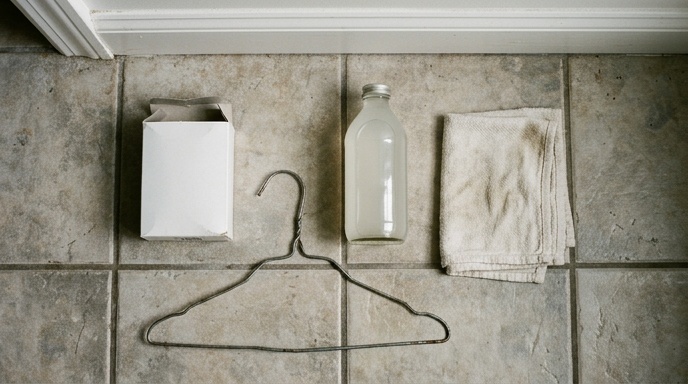
Several common household items can clear a blocked toilet, with the most effective being washing-up liquid, baking soda and vinegar, or a wire coat hanger. Each works on a different type of blockage, so the right choice depends on what’s causing the clog.
1. Baking Soda and Vinegar
Baking soda and vinegar works well on organic build-up and mild blockages. Pour one cup of baking soda into the bowl, followed slowly by two cups of white vinegar. It will fizz, so add it gently. Leave it for 30 minutes to an hour, then follow with hot water and flush.
2. A Wire Coat Hanger
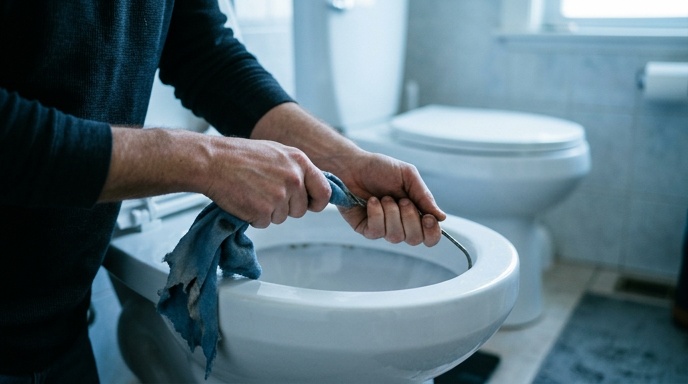
A straightened wire coat hanger can reach and break up a blockage sitting just past the bend. Unwind the hanger, wrap the hooked end in an old cloth to protect the ceramic, and gently push and twist to dislodge the clog. Don’t force it, as you can scratch the glaze or push the blockage further in.
3. A Toilet Brush or Mop Head
A toilet brush pushed into the outlet can create enough suction to mimic a plunger. Cover the drain hole with the brush head, then push and pull in short, firm strokes. A plastic bag tied over a mop head does a similar job for a tighter seal.
- Washing-up liquid and hot water for soft, everyday clogs.
- Baking soda and vinegar for organic build-up and odour.
- A wire hanger for a blockage just past the trap.
- A brush or bagged mop head when you need suction without a plunger.
What Should You Never Do to a Blocked Toilet?
Never pour boiling water, harsh drain chemicals, or force repeated flushes into a blocked toilet. These cause more harm than good, and some can turn a simple blockage into a cracked pan or a chemical burn risk when a professional later opens the pipe.
Shop-bought drain unblockers are especially risky in a toilet. They’re formulated for sinks, and in a WC they sit in the trap, generate heat, and can damage seals and pipework. If the chemical doesn’t clear the clog, the caustic water then has to be dealt with by hand.
- Don’t use boiling water. It can crack ceramic and soften plastic pipes.
- Don’t tip caustic drain cleaner into the bowl. It rarely works and creates a hazard.
- Don’t keep flushing a full bowl. You’ll flood the bathroom.
- Don’t put wipes, cotton pads, or sanitary items down after a blockage. Only the three Ps belong in a toilet, pee, poo and paper.
Most recurring blockages come from flushing things that never break down. The guidance from Uisce Éireann on what not to flush is worth a read if the same toilet keeps clogging, because prevention is far cheaper than repeat call-outs.
How Do You Stop a Toilet Blocking Again?
You stop a toilet blocking again by flushing only pee, poo and paper, using less toilet roll per flush, and dealing with any slow-draining issue early before it becomes a full blockage. Most repeat clogs are caused by habits and by problems in the pipe that never get diagnosed.
- Keep a bin in the bathroom for wipes, cotton pads and sanitary items.
- Go easy on the toilet paper, and double-flush rather than one big load.
- Fix a slow or gurgling flush early instead of waiting for a full block.
- Book a survey if the same toilet clogs repeatedly, so the real cause is found.
For older houses in North Dublin and Fingal, recurring blockages are often down to tree roots or ageing clay pipes rather than anything you’re flushing. In those cases, a one-off diagnosis saves years of buckets and blocked weekends.
When Does a Blocked Toilet Need a Professional?
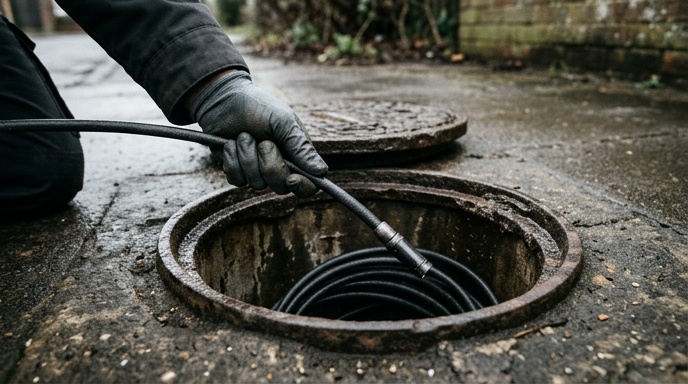
A blocked toilet needs a professional when home methods fail, when more than one drain is affected, or when waste backs up into other fixtures. These are signs the blockage is in the main drain rather than the toilet trap, and clearing it needs high-pressure jetting or a camera survey, not a kettle of hot water.
Watch for these warning signs that point to a deeper problem:
- Water or waste backing up into the shower, bath, or sink when you flush.
- Gurgling sounds from other drains in the house.
- A bad smell that keeps returning even after cleaning.
- The same toilet blocking again within days or weeks.
Repeated blockages often mean root ingress, a partial collapse, or a build-up further down the line. A CCTV camera survey pinpoints the exact cause so the pipe is fixed once, rather than cleared over and over. For a stubborn clog that won’t shift, professional drain unblocking uses jetting and rods that reach far beyond anything a hanger can.

