 Skip to content


Drain flies in your home almost always point to one thing. There’s a build-up of organic gunk inside a drain, and the flies are breeding in it. These small, fuzzy, moth-like insects live on the slimy film that coats pipe walls, so where you see them is usually where the problem sits.
The good news is they’re harmless and fixable. Clean out the breeding site, usually a slow or rarely used drain, and the flies disappear within a week or two. The harder part is finding every breeding spot, because one missed drain keeps the cycle going.
Below we’ll cover what causes drain flies, how to get rid of them properly, and how to keep them from coming back.
What Are Drain Flies and Where Do They Come From?
Drain flies are tiny winged insects, around 2mm long, with fuzzy grey or tan bodies and a moth-like look. They breed in the organic slime that collects inside drains, overflow pipes and seldom-used plugholes. That film of hair, grease, soap scum and food waste is their entire food and nursery.
You’ll spot them resting on walls near a sink, bath or floor drain, often in the bathroom or a utility room. They’re weak fliers, so they tend to stay close to where they hatched.
Common breeding spots in an Irish home include:
- Bathroom sink and shower drains with hair and soap build-up
- Kitchen sink traps holding grease and food waste
- Floor drains in utility rooms, garages and outhouses
- Rarely used plugholes where water has evaporated from the trap
- Outside gullies and overflow pipes clogged with debris
If you keep seeing them, there’s active breeding happening nearby. Finding that exact spot is the whole game.
How Do You Confirm Which Drain the Flies Are Breeding In?
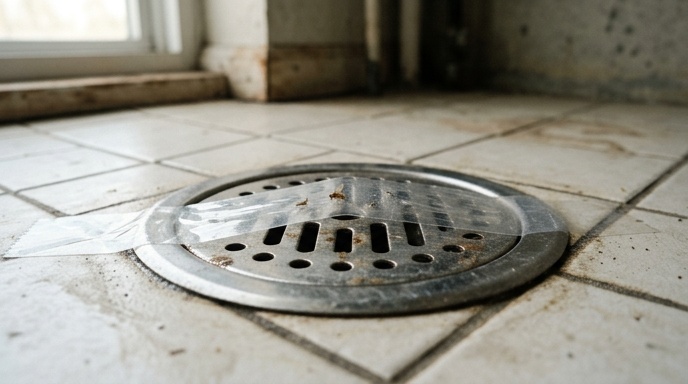
Tape a strip of sticky tape over the suspect drain overnight, sticky side down, leaving a small gap for air. In the morning, trapped flies on the tape confirm that drain is an active breeding site. It’s a cheap, reliable test and it stops you cleaning the wrong pipe.
Run the tape test on every drain where you’ve seen flies. Do this in order:
- Cover each suspect drain with tape before bed, leaving a tiny air gap.
- Check each strip in the morning for stuck flies.
- Mark the drains that caught flies as active sites.
- Leave clear drains uncovered and move on.
Often more than one drain tests positive, which is why single-drain fixes fail. Clean every confirmed site, not just the obvious one, or the flies keep hatching from the drain you skipped.
How to Get Rid of Drain Flies for Good
Getting rid of drain flies means physically removing the slime they breed in, not just killing the adults you can see. The adults live only a few days, so the ones flying about now aren’t the problem. The larvae and the gunk in the pipe are. Clear that out and the cycle breaks.
Here’s the method that works:
- Scrub the drain walls with a long stiff brush to break up the slime film inside the pipe.
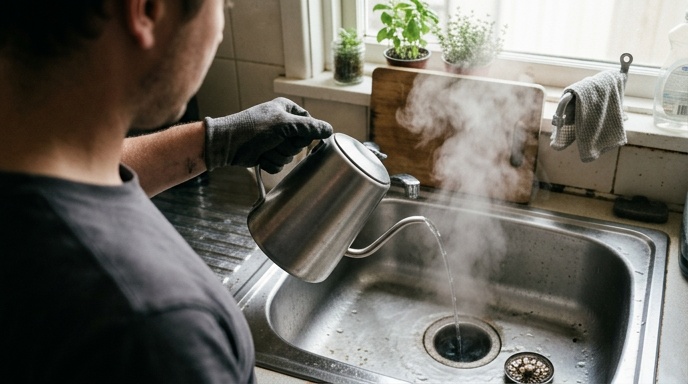
- Pour a kettle of near-boiling water down slowly to loosen grease and flush loose debris.
- Follow with a baking soda and white vinegar mix, leave it to fizz for 30 minutes, then flush with hot water again.
- Repeat the flush daily for a week to catch newly hatched larvae.
- For rarely used drains, run the tap for a minute every few days to keep the trap sealed with water.
Avoid tipping bleach down as your main fix. It kills some larvae on contact but doesn’t shift the slime they feed on, so the problem returns. Removing the build-up is what ends it.
What If the Flies Keep Coming Back After Cleaning?
Persistent drain flies after a thorough clean usually mean the breeding site is deeper in the system than you can reach. A cracked pipe, a blocked underground drain, or a build-up below floor level can hold enough slime to keep flies hatching no matter how often you scrub the plughole.
At that point it’s worth getting the drain looked at properly. A CCTV drain survey sends a camera through the pipe to find the exact source, whether that’s a hidden build-up, a defect, or standing water in a damaged section.
When Are Drain Flies a Sign of a Bigger Drain Problem?
Drain flies become a warning sign when they return repeatedly despite cleaning, appear in several rooms at once, or come alongside slow drainage and bad smells. On their own they’re a nuisance. Combined with those symptoms, they often point to a blockage or a damaged pipe holding stagnant waste.
Watch for these combinations:
- Flies plus a slow or gurgling drain, which suggests a partial blockage further down
- Flies plus a persistent sewer-like smell, a classic sign of standing waste in the line
- Flies appearing in multiple rooms, pointing to a shared drain or soil pipe issue
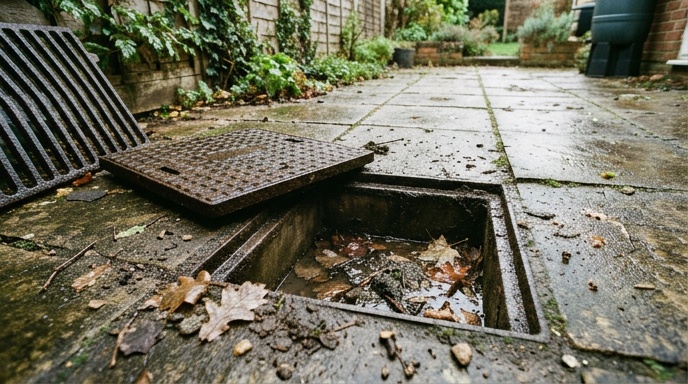
- Flies around an outside gully that keeps backing up after rain
If any of those sound familiar, surface cleaning won’t hold. A professional clear-out with high-pressure jetting scours the pipe to its full width and removes the build-up the flies feed on. For a stubborn case, pairing jetting with a camera survey finds and fixes the root cause in one visit.
How to Stop Drain Flies Coming Back
Preventing drain flies comes down to keeping drains clean and traps full of water, because both remove the conditions they need to breed. Regular flushing stops slime building up, and running water through unused drains keeps the trap sealed so flies can’t crawl up from below.
Simple habits that keep them away for good:
- Flush each drain with hot water weekly to stop grease and soap scum settling
- Clear hair from shower and bath plugholes regularly
- Scrape plates before washing up so less food waste enters the kitchen trap
- Run taps in guest bathrooms or rarely used sinks every few days
- Fit drain covers to catch debris before it goes down
- Book planned maintenance for commercial kitchens and busy premises
For restaurants, pubs and cafes, grease is the main driver, so a grease trap that’s cleaned on schedule makes a real difference. If you run a food business, a planned maintenance contract keeps drains clear and keeps you compliant, which matters when the HSE call round.
For general guidance on household pests, Citizens Information covers environmental and home living topics worth knowing about.
Do Drain Flies Carry Disease or Cause Harm?
Drain flies don’t bite, sting or spread disease to humans in any meaningful way. They’re a hygiene nuisance rather than a health threat. The concern is less the flies themselves and more what their presence tells you, that there’s decaying organic matter sitting in a drain nearby.
That said, large numbers can trigger problems for some people:
- They can aggravate asthma or allergies in sensitive individuals when numbers are high
- They signal unhygienic build-up that may breed bacteria
- In a commercial kitchen, visible flies can fail a hygiene inspection
For a home, they’re more irritating than dangerous. The HSE health information service covers indoor air quality and allergy triggers if someone in the house is affected. Either way, clearing the breeding source solves both the nuisance and the underlying hygiene issue.
Getting Rid of Drain Flies and Keeping Them Gone
Drain flies are a small problem with a clear fix. Find the breeding drain, clear the slime properly, and keep traps full of water, and they won’t come back. When they keep returning after a good clean, that’s your cue the build-up sits deeper in the system.
If you’ve cleaned every drain and the flies keep hatching, or they come with slow drainage and a smell, get the line checked before it turns into a blockage. Call the 24/7 team on (01) 849 1706 or request a free callout and we’ll trace the source and sort it.


