 Skip to content


Most septic tanks in Ireland should be emptied every one to three years, with once a year being the safest rule of thumb for an average family home. The exact timing depends on tank size, how many people live in the house, and what goes down the drains.
Under the EPA’s domestic wastewater treatment system guidance, the owner is responsible for keeping the system working and desludging it when needed. Leave it too long and you risk blockages, bad smells, and raw sewage surfacing in your garden.
Below we’ll cover how often to empty a septic tank in Ireland, what the regulations expect, the signs your tank is full, and what moves your emptying schedule up or down.
How Often Should a Septic Tank Be Emptied in Ireland?
A septic tank in Ireland should be emptied at least once a year for most households, though a larger tank serving fewer people may stretch to every two or three years. Emptying removes the sludge that builds at the bottom and the scum layer on top, both of which stop the tank treating waste properly.
Annual desludging is the standard advice because sludge accumulates whether you can see it or not. A tank that looks fine on the surface can still be close to full underneath.
- Average 4-person home, standard tank, empty roughly once a year.
- Larger tank with two or three occupants, every two to three years can be enough.
- Holiday home used part of the year, longer gaps, but still get it checked.
- Any home where you notice slow drains or smells, sooner rather than later.
If you’re unsure where your system sits, a quick check during a scheduled empty settles it. Our team handles septic tank emptying across rural North Dublin, Meath and Louth and can tell you what schedule suits your tank.
What Do Irish Septic Tank Regulations Say About Emptying?
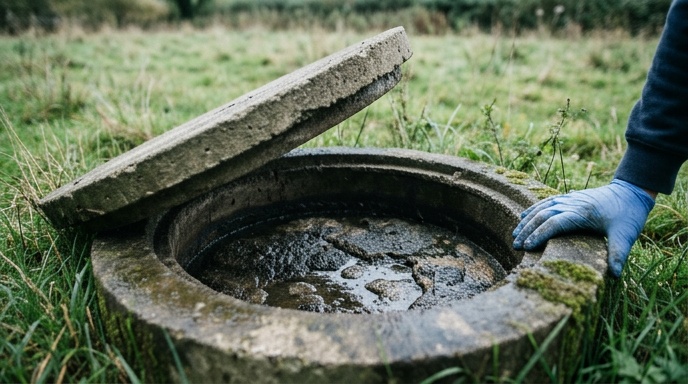
Irish regulations put the duty to desludge on the homeowner, requiring that the tank is emptied by an authorised contractor whenever the sludge level means it can no longer treat wastewater safely. This comes under the domestic wastewater treatment system rules enforced by local authorities and overseen by the EPA.
There’s no single fixed date in law that tells you to empty on a certain month. Instead, the requirement is that the system works and does not pollute. In practice that means regular desludging and keeping proof of it.
- Use a contractor with a national waste collection permit to remove and dispose of the sludge legally.
- Keep your receipt or desludging record as evidence the tank was serviced.
- Expect an inspection if your property falls within a local authority’s registration and inspection programme.
You can check the current rules and your duties through the EPA’s guidance on domestic wastewater treatment systems. Holding a valid waste permit matters here, because fly-tipping of septic waste is both illegal and traceable back to the property.
What Are the Signs a Septic Tank Needs Emptying?
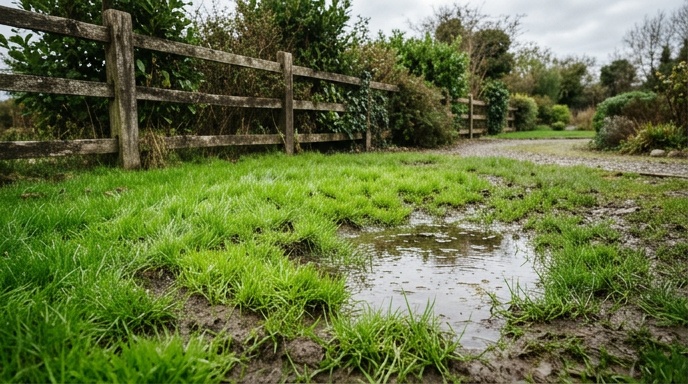
The clearest signs a septic tank needs emptying are slow-draining sinks and toilets, gurgling pipes, foul smells near the tank, and lush or soggy patches of grass over the percolation area. These point to sludge building up and the system struggling to cope.
Catching these early saves you from the worst outcome, which is sewage backing up into the house or surfacing in the garden.
1. Warning Signs Inside the House
Inside, watch for drains that empty slowly across several fixtures at once, or toilets that gurgle and struggle to flush. When more than one fixture slows down together, the problem is usually the tank rather than a single blocked pipe.
2. Warning Signs Outside
Outside, look for standing water, stronger-than-usual smells, or bright green grass over the drainage area. That vivid growth means partly treated effluent is reaching the soil surface, a sign the tank is overloaded.
If you spot any of these, don’t wait for the next scheduled empty. Slow drains across the house often mean the tank is already near capacity.
What Affects How Often You Need to Empty a Septic Tank?
How often you empty a septic tank depends mainly on tank size, the number of people in the house, water usage, and what ends up going down the drains. A small tank in a busy family home fills far quicker than a large tank serving a retired couple.
Understanding these factors helps you plan a realistic schedule instead of guessing.
| Factor | Effect on Emptying Frequency |
|---|---|
| Tank size | Smaller tanks need emptying more often |
| Number of occupants | More people means faster sludge build-up |
| Daily water use | High usage shortens the time between empties |
| Items flushed | Wipes, fats and non-degradables fill tanks faster |
| Garbage disposal unit | Adds solids and shortens the cycle |
Two things homeowners control most are what gets flushed and how water is used. Keeping fats, wipes, and sanitary items out of the system does more for your schedule than almost anything else.
- Never flush wet wipes, nappies, or cotton buds, even the ones labelled flushable.
- Pour cooking fat into a container and bin it, don’t rinse it down the sink.
- Spread out laundry loads rather than running several in one day.
- Fix leaking taps and running toilets that quietly flood the tank.
What Happens If You Don’t Empty Your Septic Tank?
If you don’t empty a septic tank, sludge eventually fills it to the point where solids pass into the percolation area and clog it, leading to sewage backing up indoors or surfacing outdoors. At that stage you’re looking at far more expensive repairs than a routine empty.
A neglected tank can also pollute nearby groundwater and wells, which is why the regulations treat desludging as a genuine duty, not a suggestion.
- Blocked percolation pipes that need excavation and replacement.
- Raw sewage in the garden or coming back up through drains.
- Contamination of your own or a neighbour’s water supply.
- Possible enforcement action from the local authority.
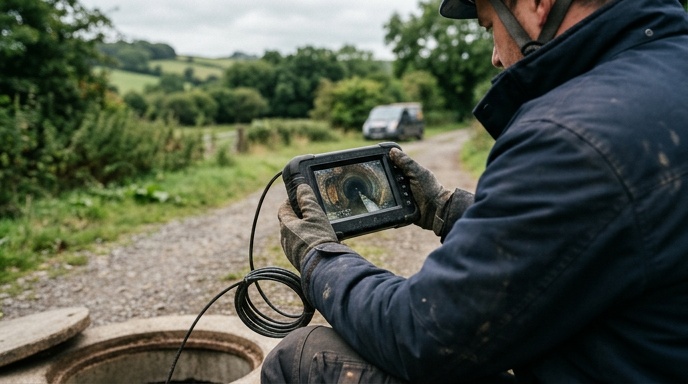
A regular empty is a small, predictable cost compared with a collapsed or clogged system. If your drains are already slowing down, a quick CCTV drain survey can show exactly what’s happening below ground before it turns into a dig-up.
How Much Does Septic Tank Emptying Cost in Ireland?
Septic tank emptying in Ireland is typically priced per job and varies with tank size, access for the tanker, how far the waste must be transported, and how full the tank is. Because Irish drainage prices aren’t published by any official body, treat any figure as an estimate and confirm with a free callout.
Access is often the biggest swing factor. A tank right beside a hard surface is quick, while one at the back of a long, soft garden takes longer and costs more.
- Tank capacity, bigger tanks hold more sludge to remove.
- Ease of tanker access to the lid and chamber.
- Distance to a licensed disposal point.
- Whether the tank is overdue and heavily compacted.
For an accurate figure on your own system, it’s worth getting a fixed price up front before any work starts, so there are no surprises on the day. You can also read the Citizens Information guidance on domestic wastewater and septic tanks for your wider responsibilities as an owner.
Keeping Your Septic Tank Working the Simple Way
Regular desludging, usually once a year for an average home, is the single best thing you can do to keep a septic tank healthy and avoid messy, costly failures. Pair that with sensible habits around what goes down the drain and your system will quietly do its job for years.
If your tank is overdue, your drains are slow, or you simply want someone to check the schedule that suits your home, get in touch with our team and we’ll sort it with no mess and no fuss.


